
Designing a calmer, smarter airport experience from research to high-fidelity prototype.
During my internship at N+P Innovation Design in Munich, I was tasked with designing the UX and UI for a mobile airport app. The goal was to reduce passenger stress through clear wayfinding, real-time flight updates, and an intuitive information hierarchy.
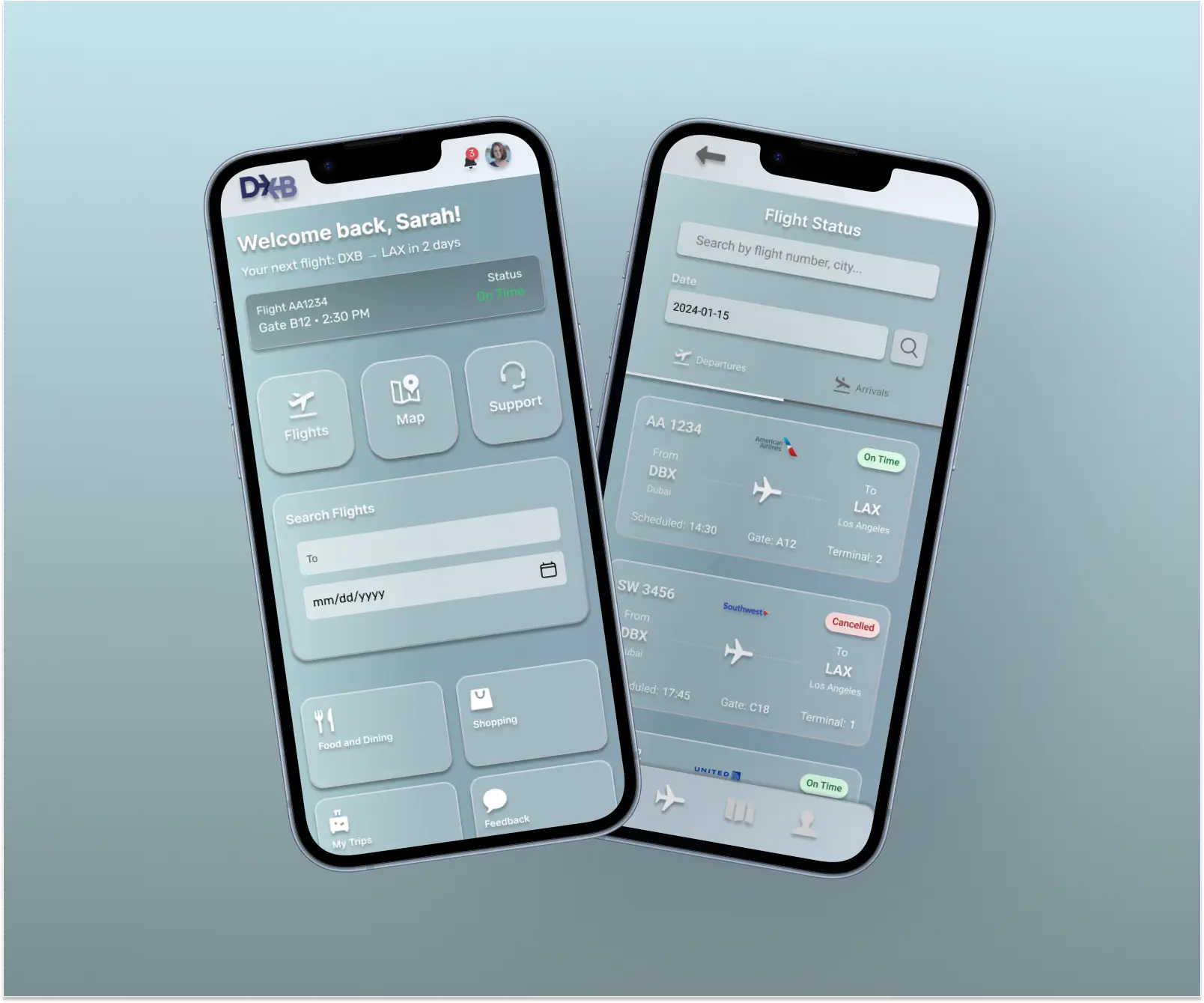
Led the full design process from research to high-fidelity prototype, structuring information architecture and user journeys across 11 total hi-fi screens, 2 delivered to production-ready standard.
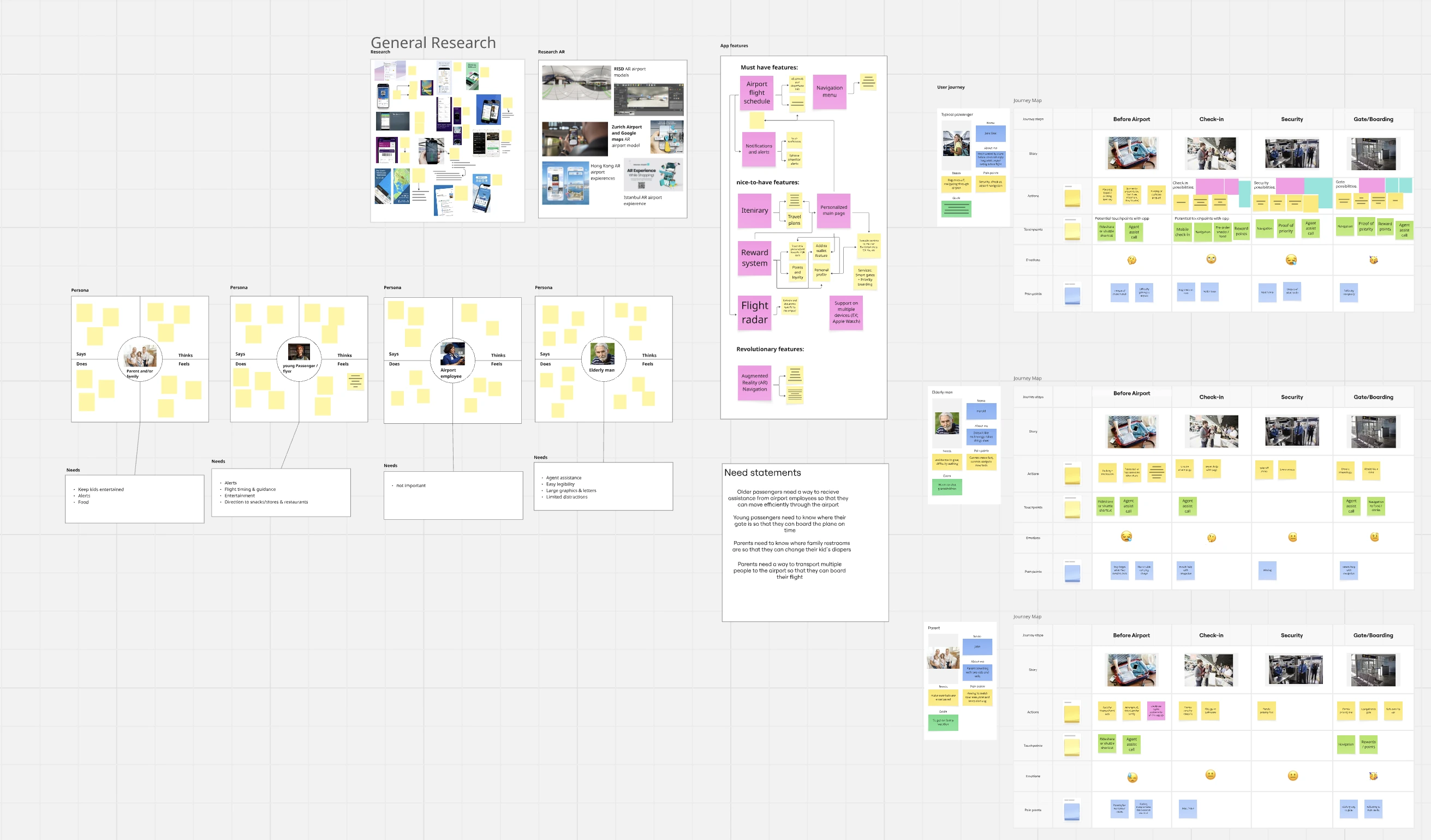
Conducted comprehensive research on similar airport apps and existing ideas to identify gaps and opportunities. Considered four distinct personas: families, young flyers, elderly passengers, and airport employees to tailor the design to diverse user needs. Evaluated feature requirements through competitive analysis, focusing on intuitive navigation, real-time updates, and accessibility. Developed user-journey mappings to visualize pain points and ideal flows. Finally, crafted a to-be scenario envisioning a seamless, stress-free airport experience.
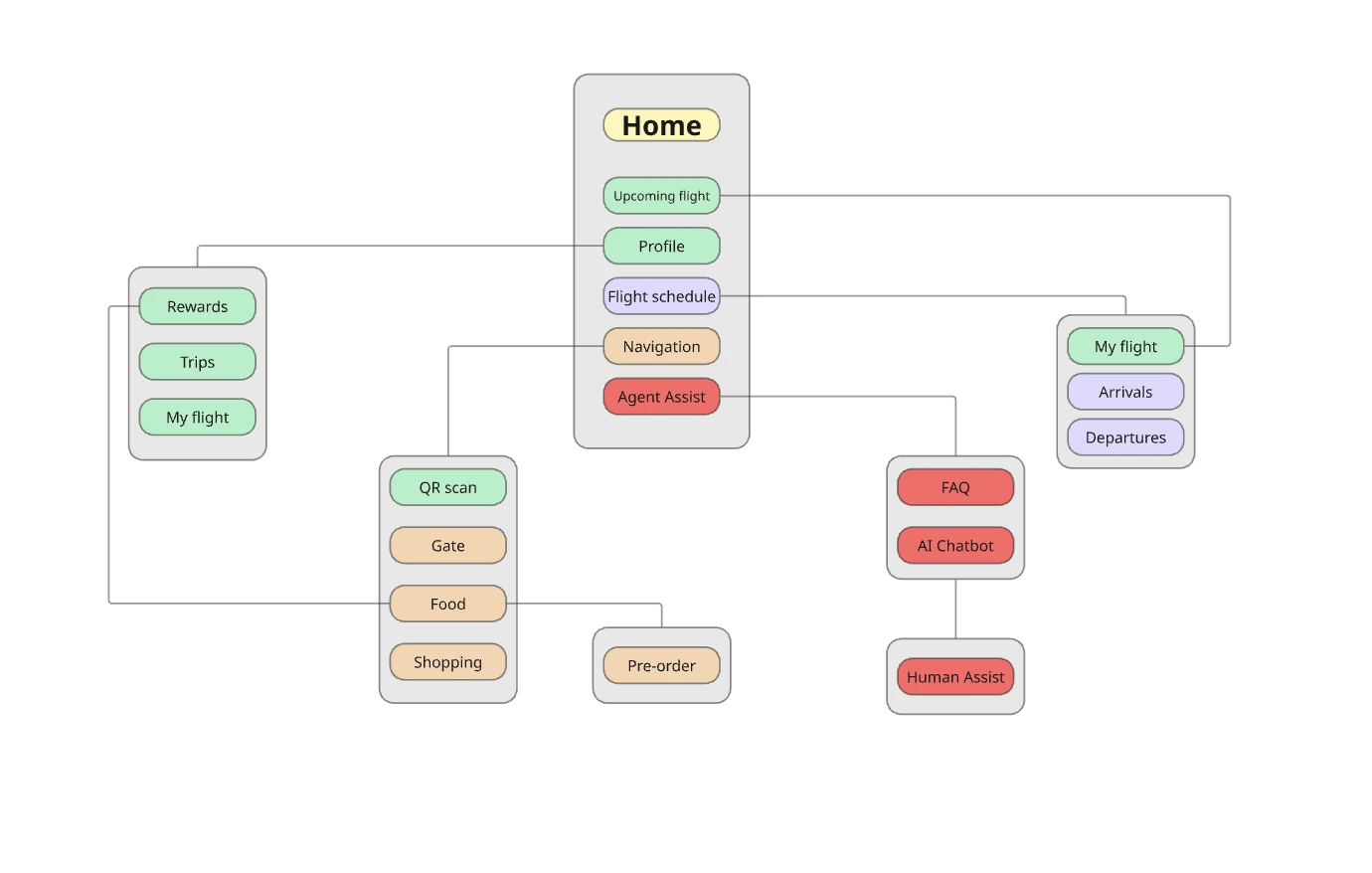
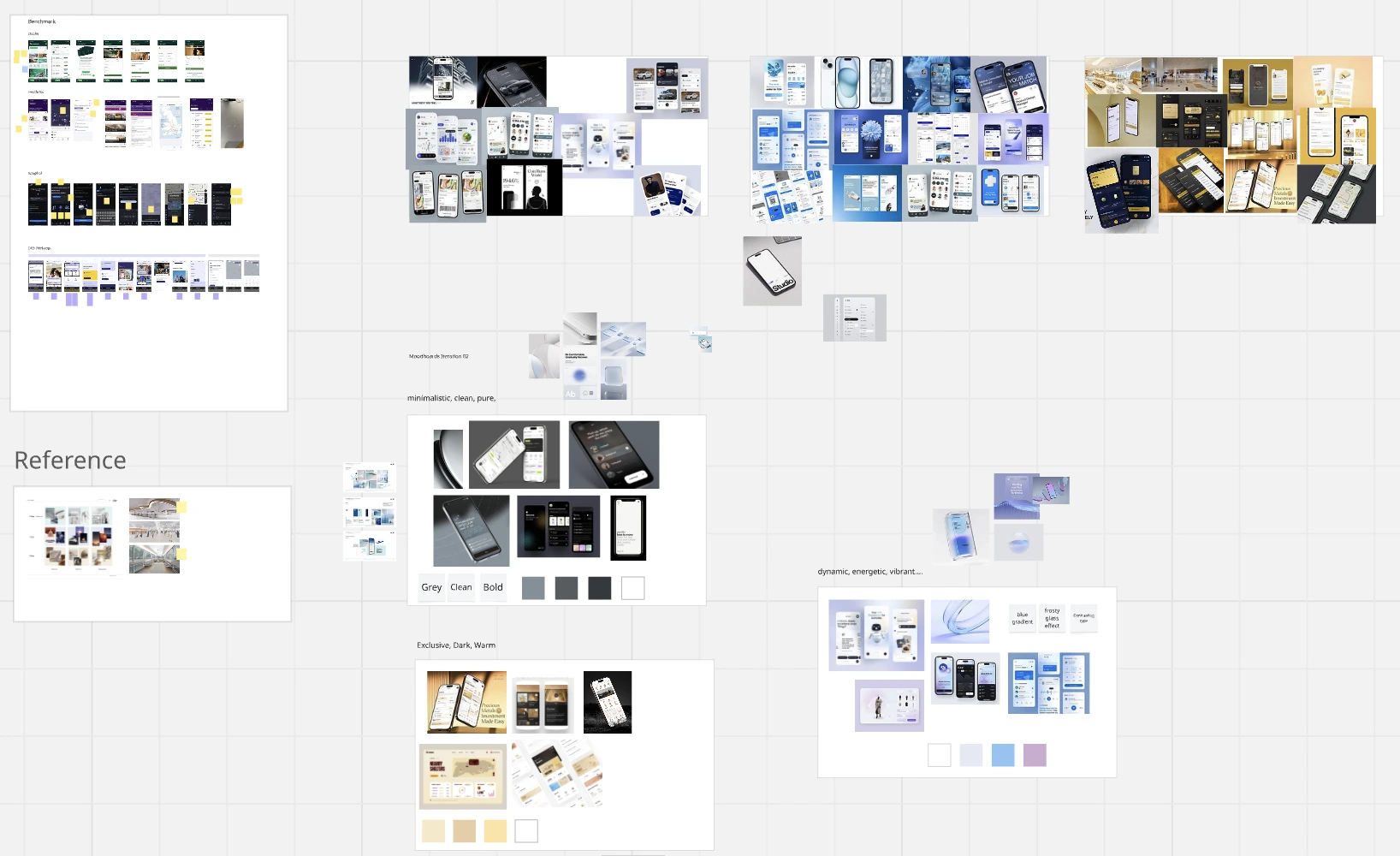
Structured information architecture and user journeys, creating wireframes in Figma and Miro to improve usability and navigation clarity.

Designed 11 high-fidelity screens, delivering 2 to full production-ready standard through iterative prototyping and structured UX planning.
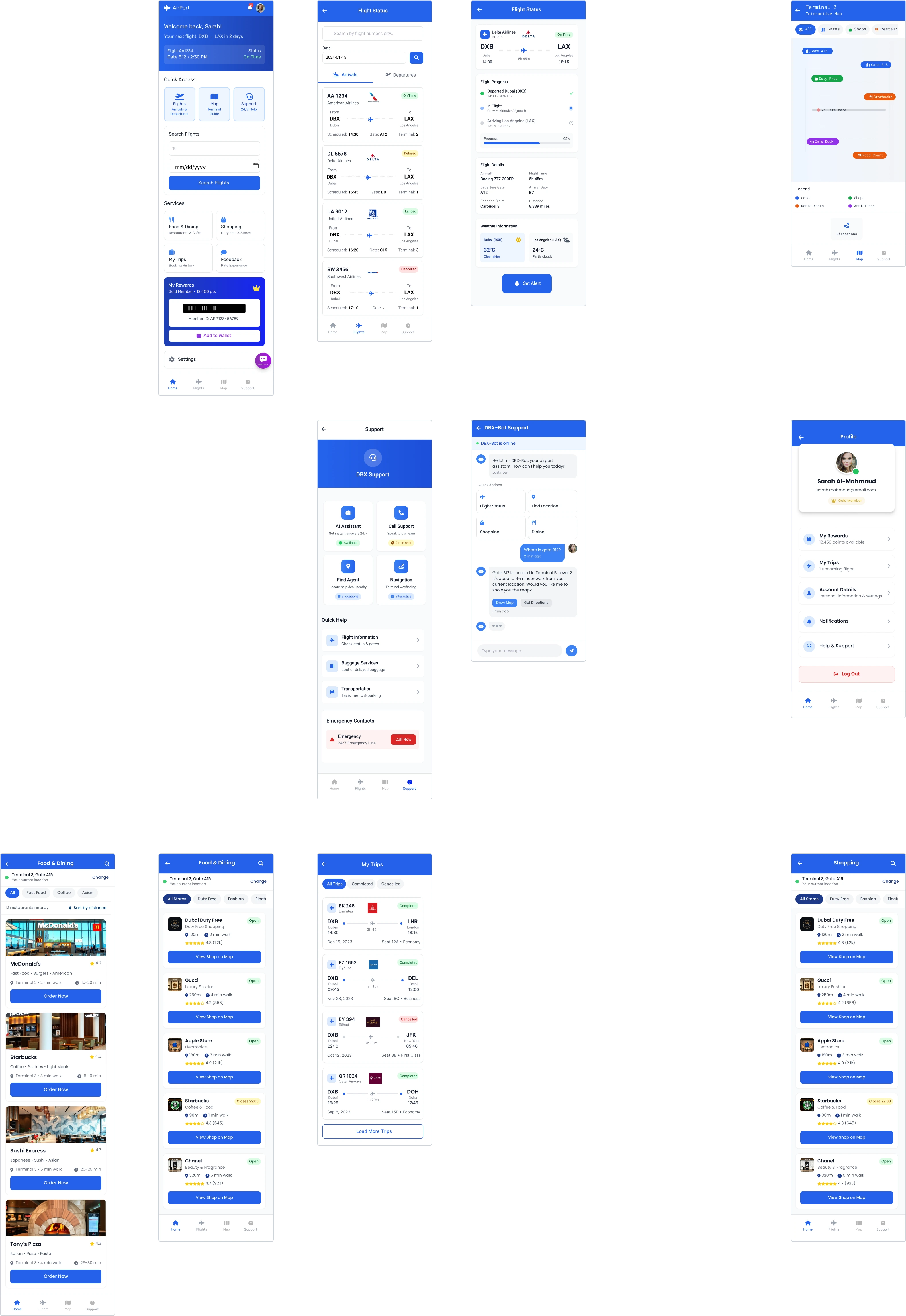
This project strengthened my understanding of how thoughtful product design can reduce friction and improve user confidence in high-stress environments. Through research, information architecture, and iterative prototyping, I learned how to simplify complex airport workflows into clear, intuitive user experiences.
Working across multiple personas also reinforced the importance of accessibility, usability, and structured design systems when building products at scale. Looking back, I would place greater emphasis on user testing and real-world validation to further refine interaction flows and accessibility considerations.
Most importantly, the project showed me that effective UX design is not only about visual polish, but about creating experiences that feel seamless, reliable, and stress-reducing for users.